


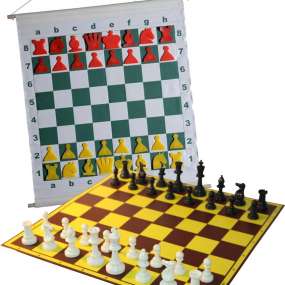

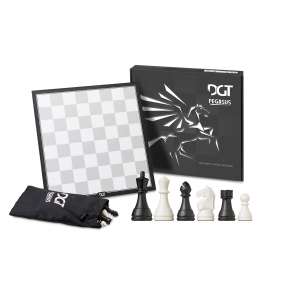




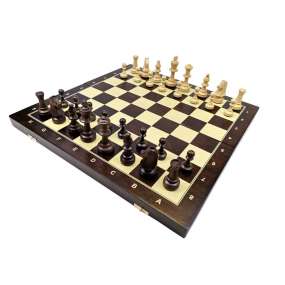
SZACHY TURNIEJOWE w kolorze WENGE NR. 5
Klasyczny, profesjonalny zestaw turniejowy w rozmiarze nr 5 (48x48 cm)
Ciemny kolor zestawu sprawia, że szachy prezentują się bardzo oryginalnie.
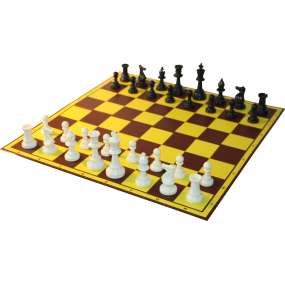
PAKIET 10 ZESTAWÓW SZKOLNYCH - IDENTYCZNY ZESTAW DO TYCH UŻYWANYCH W PROJEKCIE "EDUKACJA PRZEZ SZACHY W SZKOLE"
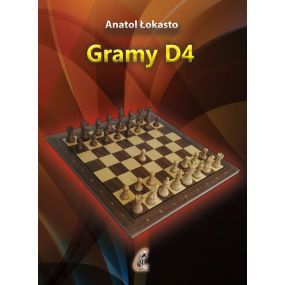
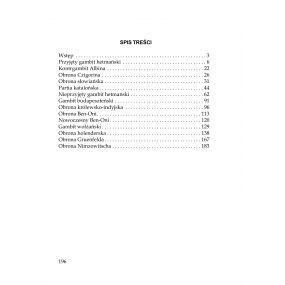
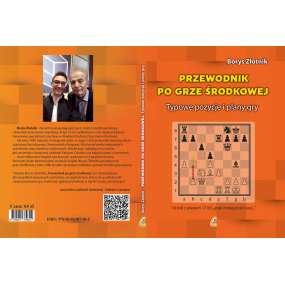
Autor przygotował materiał, który zawiera propozycje gry wariantów przeciwko debiutom zamkniętym i pół zamkniętym Każdemu debiutowi autor poświęcił tyle miejsca, na ile zasługuje ze względu na bogactwo wariantów i częstość jego występowania w praktyce turniejowej. Autor celowo ominął większość systemów z nieprzyjętego gambitu hetmańskiego, które w zasadzie powinny być obowiązkowe w repertuarze debiutowym zawodnika rozpoczynającego partię posunięciem 1.d2-d4.
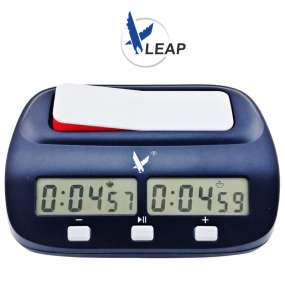
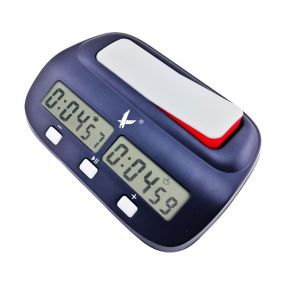
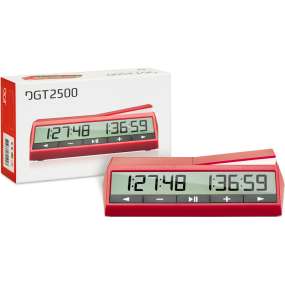
 Nowy elektroniczny zegar szachowy LEAP KK9908
Charakterystyka zegara:
• zegar z atestem FIDE!
• opcja dodawania czasu
• 37 ustawień zegara dla szachów oraz różnych gier
• maksymalna prostota obsługi
• duży, czytelny wyświetlacz pozwala na odczytanie czasu nawet z odległości 10m!
waga: 0,2 kg
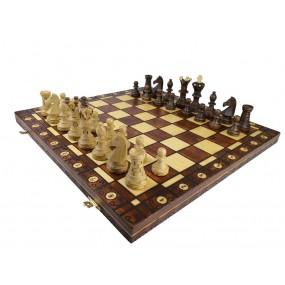
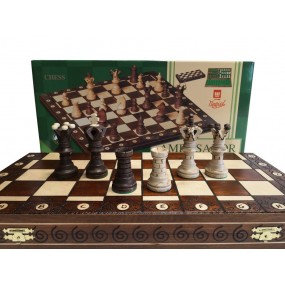
Najlepiej sprzedające się szachy od lat.
Najlepszy stosunek jakości do ceny.
Szachownica i figury wykonane z drewna.
SZACHOWNICA wypalana, składana na pół,
w środku znajduje się wkładka na figury szachowe
FIGURY drewniane, wypalane, podklejane zielonym filcem
Wymiary szachownicy: 54 x 54 x 3 cm
Wymiar pola: 55 x 55 mm
Król: 110 mm
Waga 2.50 kg
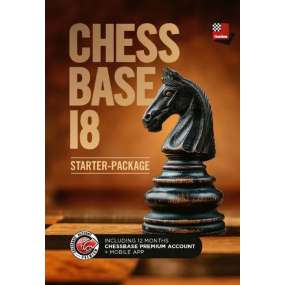
Produkt dostępny wyłącznie w formie pobrania
Nowe książeczki ChessBase zawierają kod aktywacyjny, który umożliwia pobranie produktu. ChessBase 18 oraz nowe bazy danych nie będą już wydawane na DVD-ROM. Szczegóły na końcu opisu.
ChessBase to samodzielna baza danych szachowych, która stała się światowym standardem. Korzystają z niej wszyscy – od mistrzów świata po amatorów. Jest to ulubiony program każdego miłośnika szachów, który chce poszerzyć swoją wiedzę i umiejętności. Rozpocznij swoją osobistą przygodę z sukcesami dzięki ChessBase i ciesz się grą jeszcze bardziej.
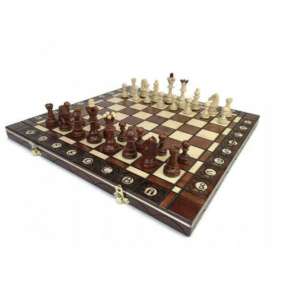
Szachownica i figury wykonane są z drewna.
Wymiary: 420 x 210 x 50 mm
Król: 78 mm
Waga 1.60 kg
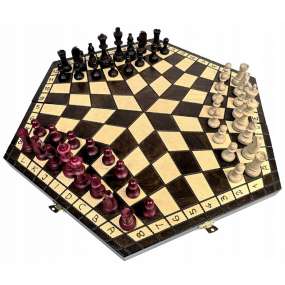
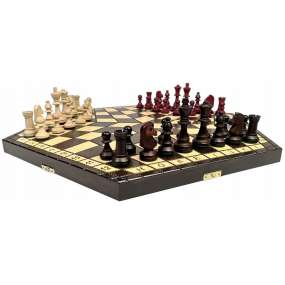
Szachy drewniane
Wymiary: 270 x 470 x 50 mm
Król: 85 mm
Waga: 1,1 kg

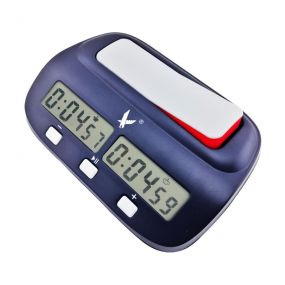
Nowy elektroniczny zegar szachowy LEAP KK9908
Charakterystyka zegara:
• zegar z atestem FIDE!
• opcja dodawania czasu
• 37 ustawień zegara dla szachów oraz różnych gier
• maksymalna prostota obsługi
• duży, czytelny wyświetlacz pozwala na odczytanie czasu nawet z odległości 10m!
waga: 0,2 kg
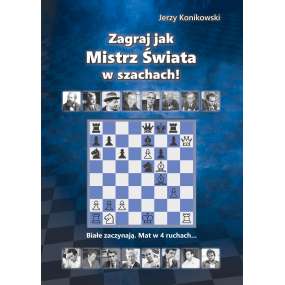
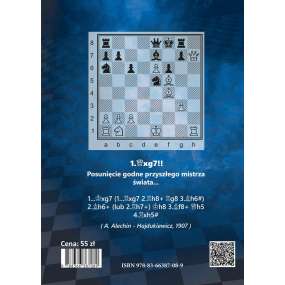
Niezwykle istotne jest zapoznanie się z dorobkiem twórczym mistrzów świata. Czego można się nauczyć od nich? Z całą pewnością bardzo wiele. Każdy z nich był bowiem najwybitniejszym graczem swoich czasów i na drodze do tytułu najsilniejszego zawodnika globu musiał pokonać elitę najlepszych z najlepszych oponentów w rozgrywkach eliminacyjnych i w końcu zwyciężyć w meczu finałowym! W tych trudnych i emocjonujących spotkaniach musiał wykorzystać wszystkie swoje umiejętności oraz wiedzę, aby rozłożyć na łopatki wielu znakomitych przeciwników!
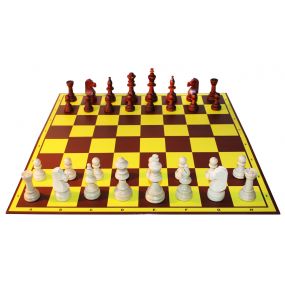
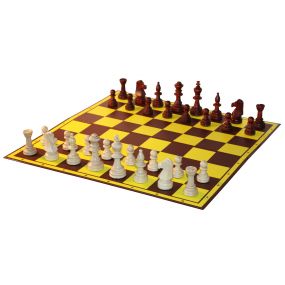
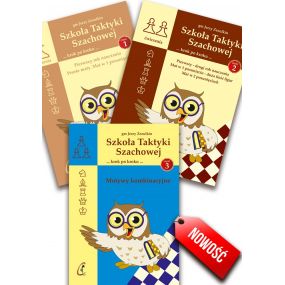

Zestaw idealnie uzupełnia program nauczania "Edukacja przez Szachy w Szkole" (Książki Magdaleny Zielińskiej "Grajmy w szachy").
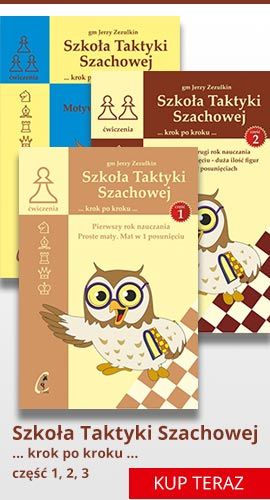
Seria książek ”Szkoła Taktyki Szachowej” to zestaw zeszytów ćwiczeniowych, które pozwolą krok po kroku, w systematyczny i uporządkowany sposób opanować umiejętności potrzebne każdemu początkującemu szachiście, takie jak: elementarne matowanie króla przeciwnika, zrozumienie sposobu działania wszystkich figur oraz współpracy pomiędzy nimi, a także podstawowe motywy taktyczne.
To kompleksowe narzędzie do nauki szachisty, aż do III kategorii!
Książki stanowią idealne uzupełnienie wszystkich dostępnych podręczników, m. in. Magdaleny Zielińskiej ”Grajmy w szachy”, uznanego, jako oficjalny podręcznik programu Edukacja przez Szachy w Szkole.
”Szkoła Taktyki Szachowej” ... krok po kroku ... to jedna z nielicznych pozycji na rynku, która została stworzona tak, aby nauka stała się jak najskuteczniejsza i nie przerodziła się w nużący obowiązek.
Zadania ułożone są w odpowiedni sposób, zachęcający do doskonalenia swoich umiejętności, liczba zadań w każdej z części została dobrana tak, aby młody szachista mógł wystarczająco przećwiczyć zdobyte umiejętności, a przy tym nie znudził się monotonnością tematyki.
Trzecia część została wzbogacona w opisy motywów kombinacyjnych, co sprawia, że stała się kompleksowym narzędziem do ich nauki - zarówno podręcznikiem jak i ćwiczeniami.
Pod każdym z zadań znajdują się miejsca na zapisanie znalezionych rozwiązań.
W celu uniemożliwienia podglądania przez młodych, ciekawskich szachistów, prawidłowe rozwiązania zostały ujęte w łatwej do wyjęcia wkładce w środku książki.
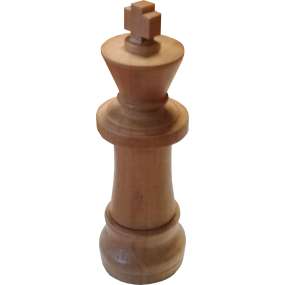
Atrakcyjnie wyglądająca pamięć USB w kształcie króla
Wykonanie: drewno egzotyczne
Pojemność: 64 GB
Wymiary:
- wysokość: 90 mm
- średnica: 30 mm
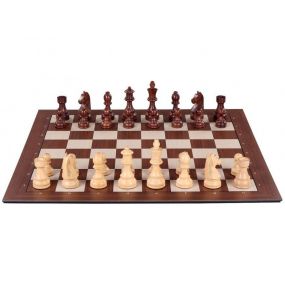
ZESTAW SMART 1 - zestaw do transmisji elektronicznej.
Zestaw stworzony z myślą o użytku profesjonalnym w ciągu szachownic (na turniejach, w klubach etc.)
Zawiera:
- szachownicę elektroniczną DGT SMARTBOARD
- figury drewniane DGT TIMELESS
- zestaw połączeniowy (tzw. zestaw kabli bocznych)
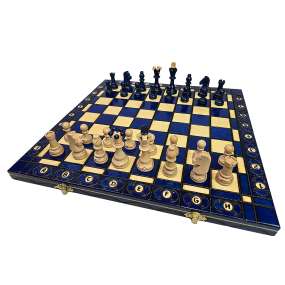
Szachownica i figury wykonane są z drewna.
Wymiary: 420 x 210 x 50 mm
Król: 78 mm
Waga 1.60 kg
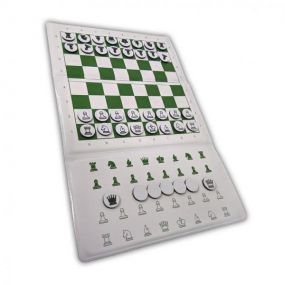

Kieszonkowe Szachy Magnetyczne w NOWEJ ODSŁONIE 2.0
Tym razem – składane na 3, dzięki czemu zyskały miejsce na "zbite" figury.
Dodatkowo wprowadzono notację, której brak czasem krytykowano w poprzedniej edycji.
Poręczny towarzysz w podróży w Twojej kieszeni!
Od dziś możesz grać w szachy gdziekolwiek i kiedykolwiek zechcesz!
- Idealne do analizy partii!
- Szachy wykonane są z tworzywa sztucznego.
- Zewnętrzna strona zrobiona została z ekoskóry.
- Materiał: Vinyl, ekoskóra, plastik

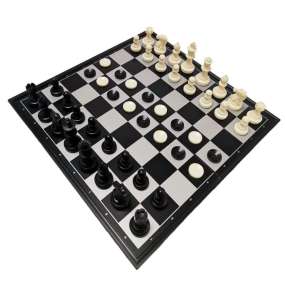
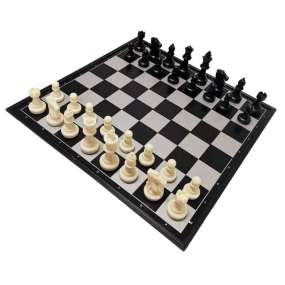
Uwaga: bierki warcabowe nie są magnetyczne.

Najniższa cena w ciągu 30 dni przed aktualną promocją: 36,9 zł
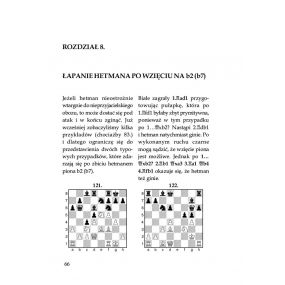
Podręcznik kombinacji szachowych dr. Tarrasha to unikalna pozycja, która powstała w oparciu o fragment pracy
Siegberta Tarasha - „Gra w szachy” traktujący o kombinacjach.
W przeciwieństwie do innych dostępnych na rynku pozycji o kombinacjach jest nie tylko ich zbiorem,
ale także opisuje mechanizmy kombinacji oraz wyjaśnia je. Dzięki temu staje się niepowtarzalna i przydatna na każdym etapie rozwoju.
Książka jest przeznaczona dla szachistów od V do II kategorii, chociaż niektóre jej fragmenty przydadzą się także szachistom I kategorii.
SPIS TREŚCI:
005 Przedmowa
007 Wstęp
011 Rozdział 1. Podwójne uderzenie
027 Rozdział 2. Związanie
045 Rozdział 3. Atak z odsłony
051 Rozdział 4. Nie broniona figura
055 Rozdział 5. Usunięcie obrony
060 Rozdział 6. Pozorna obrona
064 Rozdział 7. Zamykanie gońca
066 Rozdział 8. Łapanie hetmana po wzięciu na b2 (b7)
068 Rozdział 9. Atak na punkt f7 (f2)
070 Rozdział 10. Atak pionem „f”
072 Rozdział 11. Odsłonięcie pozycji króla
076 Rozdział 12. Rozbita pionowa pozycja roszady
080 Rozdział 13. Gdy pion h3 (h6) jest obiektem ataku
083 Rozdział 14. Atak po linii „f"
087 Rozdział 15. Atak po linii „g” (lub „b”)
094 Rozdział 16. Atak po linii „h” (lub „a”)
105 Rozdział 17. Dwa gońce przeciw pozycji roszady
107 Rozdział 18. Niebezpieczeństwa związane z długą roszadą
108 Rozdział 19. Mat Beniowskiego
111 Rozdział 20. Mat na 1. (8) linii
118 Rozdział 21. Wieczny szach
119 Rozdział 22. Wieża na otwartej linii pionowej i na 2.(7) linii
129 Rozdział 23. Działanie liniowych figur przez nieprzyjacielskie figury
131 Rozdział 24. Wolny pion
139 Rozdział 25. Daleko wysunięte piony
143 Rozdział 26. Gdy pion c6 (c3) jest obiektem ataku
145 Rozdział 27. Gdy pion b6 (b3)
149 Rozdział 28. Trochę rad
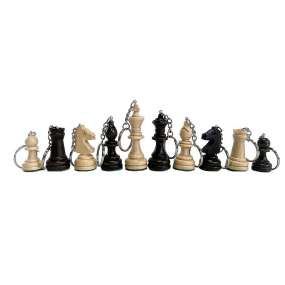
Breloki szachowe figury drewniane mix.
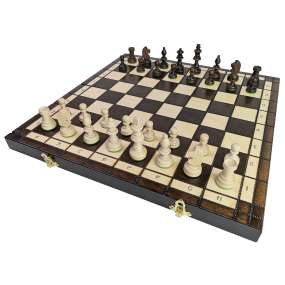
Figury szachowe drewniane nr 4 to figury o klasycznym, turniejowym kształcie.
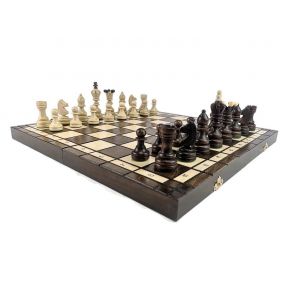
Szachownica turniejowa nr 4 składana na dwa została wyprodukowana przy użyciu metody wypalania, dzięki czemu zyskała efektowny i oryginalny wygląd. Jest to wyjątkowa, a przy tym klasyczna szachownica w kolorze mahoniu. Wewnątrz kasetki znajdziemy plastikową wkładkę na figury.
Zestaw idealnie nadaje się zarówno na prezent jak i do własnego, profesjonalnego użytku. Będzie wspaniałym narzędziem treningowym dla dzieci. Przez swoje wymiary będzie wygodny i poręczny dla dziecięcej ręki, ale przy tym, w przeciwieństwie do mniejszych szachów wciąż bardzo przejrzysty i klarowny.
Dzięki temu, że szachownica jest składana i można w niej schować figury zestaw jest prosty w użyciu i transporcie, a także zabiera niewiele miejsca w przestrzeni domowej.
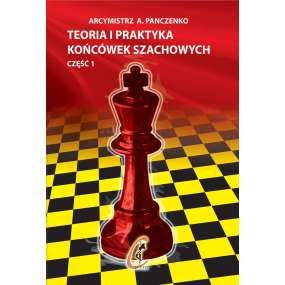
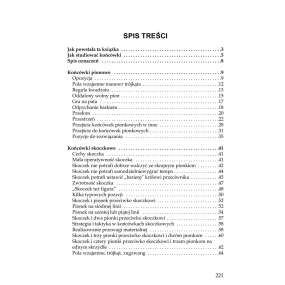
Drugie wydanie pierwszej części wspaniałej książki autorstwa czelabińskiego arcymistrza i wybitnego trenera. Pozycja ta jest wyśmienitym podręcznikiem końcówek szachowych. Autor prezentuje przede wszystkim metody i nawyki gry w końcówkach.
- Gormally – World Chess Championship – Nepo – Ding (Review)
- Shyam Sundar – World Chess Championship – The Most Instructive Moments and Positions
- Miodrag & Milos Perunovic – European Chess Championship (Tournament Report)
- Leitao – The English Opening (WCH Edition – Theoretical Survey)
- Foisor – Woman’s Candidates Final (Instructive Review)
- Prusikin – The Power of Knight Pair(Instructive Lesson)
- Davies – The Maroczy Bind (Theoretical Survey)
- Kotronias – The King’s Indian Saemisch (Theoretical Survey)
- Perelshteyn – The Alekhine Defence (Theoretical Survey)
- Rogers – Telechess Olympiads (Roger’s Reminiscences)
- Griffin – Vaganian – Gulko, Baku 1977 (From Informant Archives)
- Barak Gonen – Correspondence Chess (Review)
Traditional sections: games, combinations, endings, Tournament reviews, the best game from the preceding volume and the most important theoretical novelty from the preceding volume.
The periodical that pros use with pleasure is at the same time a must have publication for all serious chess students!

Gwarancja zwrotu pieniędzy

Bezpieczne i szybkie dostawy

Bezpieczeństwo transakcji dzięki certyfikatowi SSL

Opis
Szczegóły produktu
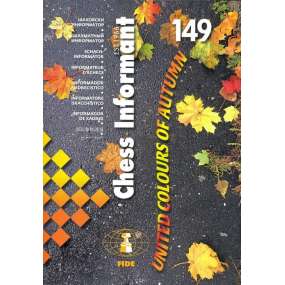
United Colours of Autumn
Presents 350 pages of the very best in chess:
Duda - How I won the World Cup
Ivic & Mio. Perunovic - World Cup Fairy Tale
Leitao - South Americans in the World Cup
Perunovic - Duda’s World Cup Black Repertory
Foisor - St. Louis Rapid&Blitz (Tournament review)
Moradiabadi - Sinquefield Cup (Tournament review)
Gormally - Danny’s Chess Diary (Northumbria Masters)
Priyadharshan K. - Asian Masters - Meltwater Tour (Tournament review)
Davies - Understanding the Openings (The Semi-Tarrasch part 1)
Szabo - Anti-Marshall 8.a4 d5!? (Opening Survey)
Prusikin - A Story about Horses and Elephants (Knight versus Bishop)
Petrov - World Championship Game Changers - part 1
Rogers - Reggie Emilia 1984/1985 (Rogers’ Reminiscences)
Griffin - A Tribute to Iron Tigran (Polugaevsky-Petrosian 1970.)
Traditional sections: games, combinations, endings, Tournament reviews, the best game from the preceding volume and the most important theoretical novelty from the preceding volume.
The periodical that pros use with pleasure is at the same time a must have publication for all serious chess students!
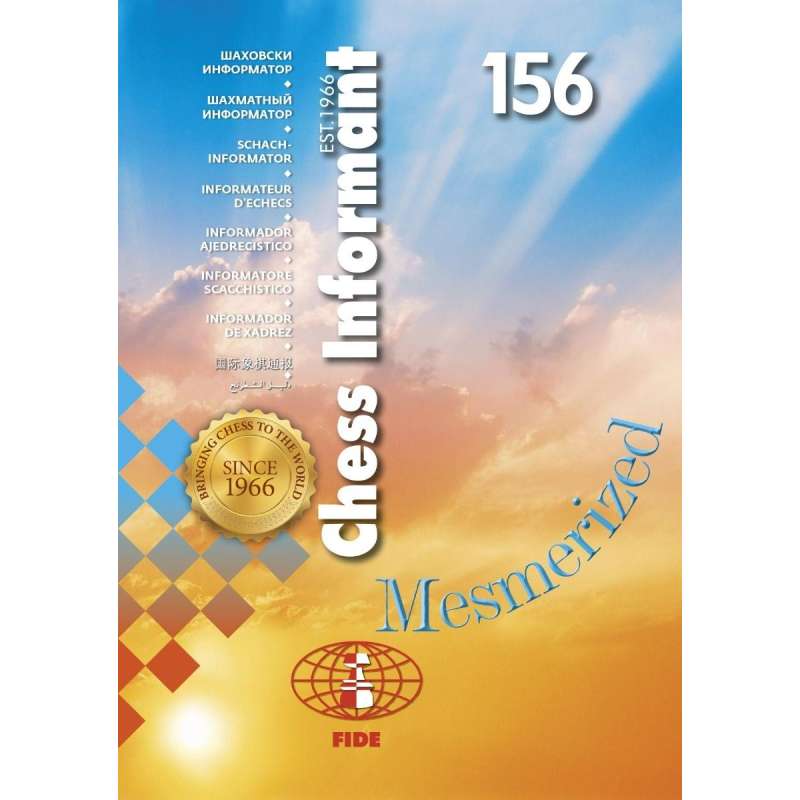
150 wydanie Chess Informant.
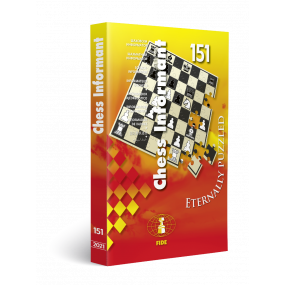
151 wydanie Chess Informant.
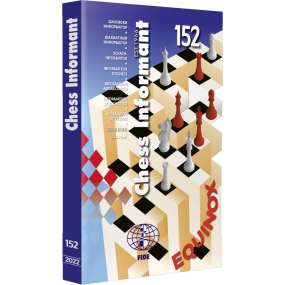
152 wydanie Chess Informant.
Leitao – Opening Trends in South American Chess
Moradiabadi – European Club Cup (Tournament Review)
Navara – European Club Cup – Novy Bor
Shyam Sundar – This or That? – Part 2
Gormally – 4NCL and Crypto Blitz (Tournament Review)
Marin – Benoni Files (Old Wine in New Bottles)
Kotronias – King’s Indian – Fianchetto Variation (Survey)
Perelshteyn – Dzindzi-Indian (Theoretical Survey)
Davies – The 3…g6 Ruy Lopez – Part 2 (Theoretical Survey)
Perunovic – Catalan (Theoretical Survey)
Rogers – Toluca 1982 Interzonal (Roger’s Reminiscences)
Griffin – Karpov – Timman 1981(From Informant Archives)
Traditional sections: games, combinations, endings, Tournament reviews, the best game from the preceding volume and the most important theoretical novelty from the preceding volume.
The periodical that pros use with pleasure is at the same time a must have publication for all serious chess students!
Leitao – Brazilian Champion in Wijk aan Zee (Tournament Review)
Moradiabadi – Tata Steel 2023 Wijk aan Zee (Tournament Review)
Yochanan Afek – Perls from Wijk (Tournament Review)
Perunovic – Instructive positions from Wijk
Foisor – Women FIDE Grand Prix Munich (Tournament Review)
Shyam Sundar – This or that? (Instructive Lesson)
Gormally – 4NCL (Review)
Prusikin – The Uncastled King (Instructive Lesson)
Davies – The Catalan 7.dc5 (Theoretical Survey)
Kotronias – The King’s Indian 5.h3 (Theoretical Survey)
Szabo – The French C11 (Theoretical Survey)
Perelshteyn – The Ruy Lopez Nerwegian Variation (Theoretical)
Petrov – World Championship Game Changers – part 6
Rogers – Belgrade Open 1984 (Roger’s Reminiscences)
Griffin – Ljubojevic – Miles, Olympiad 1980 (From Informant Archives)
Traditional sections: games, combinations, endings, Tournament reviews, the best game from the preceding volume and the most important theoretical novelty from the preceding volume.
The periodical that pros use with pleasure is at the same time a must have publication for all serious chess students!
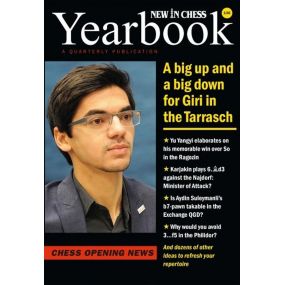
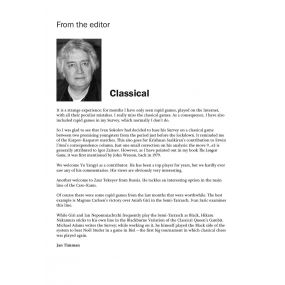
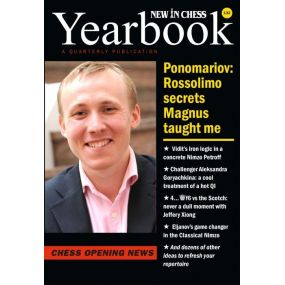
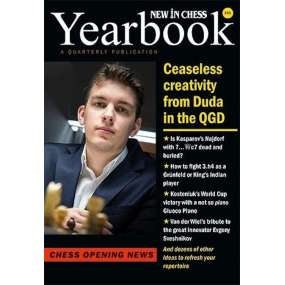
New In Chess Yearbook, which appears four times a year, contains the latest news in chess openings. Each issue brings you dozens of new ideas on the cutting edge of modern chess opening theory. Have a look at what this issue has to offer.
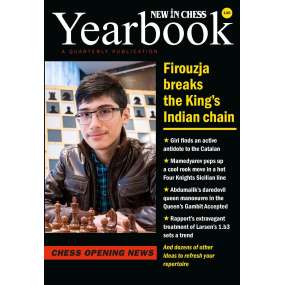

New In Chess Yearbook, which appears four times a year, contains the latest news in chess openings. Each issue brings you dozens of new ideas on the cutting edge of modern chess opening theory. Have a look at what this issue has to offer.
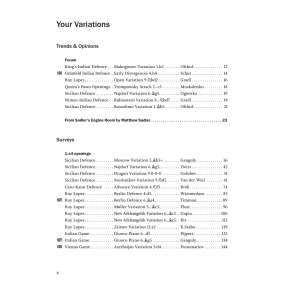
Forum
French guru Viktor Moskalenko shows two recent OTB games in the Forum Section, in which he was successful with some great ideas he presented in his latest book The Fully-Fledged French. One is a piece sac that gained him a 13-move win with black! Bogdan Lalic takes a look at another surprising black piece sac, in the King’s Indian this time. The Forum also contains some novelties from the World Cup, presented by Luis Rodi, Peter Boel and Frank Erwich.
From Sadler’s Engine Room
Matthew Sadler is our new columnist! He will alternate with Erwin l’Ami’s ‘From Our Own Correspondent’ column. The English grandmaster is well-known for the best-seller Game Changer he wrote with Natasha Regan, about computer chess. His new column will be on opening treatment by the top engines, and in his first instalment Matthew shows that these beasts are not at all averse to some offbeat opening play!
Reviews
Four books are reviewed this time – all of them with a quite original angle. The Modernized Italian Game for White by Alexander Kalinin & Nikolai Kalinichenko is more about understanding than learning lines by heart, and we know that it’s the same with Viktor Moskalenko’s books. With The Fully-Fledged French, the Ukrainian grandmaster has produced a new shoot on his favourite French opening, with a lot of brand new ideas. The didactic approach of Thomas Willemze in The Scandinavian for Club Players is really something else, and of course we couldn’t ignore the Iron English by the creative English duo Simon Williams & Richard Palliser.
152 wydanie Chess Informant.
Chess Informant 163 “Treasures” presents:
 -40%
-40%
New In Chess Yearbook, which appears four times a year, contains the latest news in chess openings. Each issue brings you dozens of new ideas on the cutting edge of modern chess opening theory. Have a look at what this issue has to offer.
151 wydanie Chess Informant.
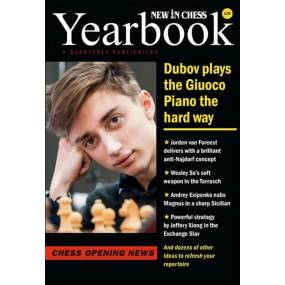

New In Chess Yearbook, which appears four times a year, contains the latest news in chess openings. Each issue brings you dozens of new ideas on the cutting edge of modern chess opening theory. Have a look at what this issue has to offer.
Forum
The Forum section contains a lot of material from the Tata Steel Chess Tournament which ended just before our deadline. You can find hot ‘Tata’ contributions by Han Schut, René Olthof and Frank Erwich, besides an impressive analysis by young player Artem Odegov, an SOS line versus the Najdorf employed by Nakamura against MVL no less than 10 times in the chess.com Speed final (written by Peter Boel) and a baffling opening discovery by new grandmaster Max Warmerdam who was also the second of Tata winner Jorden van Foreest.
From Our Own Correspondent
Our GM correspondent Erwin l’Ami dives deep into five openings again with the help of correspondence chess games. You’re getting the latest on the English Attack vs the Najdorf, a new path for Black in a difficult King’s Indian/Benoni hybrid, a sharp attacking game with the Shirov/Shabalov Slav, a new blow for the Blumenfeld Gambit, and another blow for a much-applauded Bobby Fischer idea for Black in the Benoni.
Reviews
Glenn Flear sees Magnus Carlsen’s influence on opening theory grow and grow. He reviews two books on variations named after the World Champion: Carlsen’s Neo-Møller by Ioannis Simeonidis and The Carlsen Variation by Carsten Hansen – the inventor of which variation, by the way, is ‘close by’! Flear also takes a look at an impressive tome on a very obscure variation: The Exhilarating Elephant Gambit by Jakob Aabling Thomsen and Michael Agermose Jensen, and first but not least at a French opening – another novelty in the Yearbook! It’s called Jouez la Française and it’s by GM Manuel Apicella.
 -7%
-7%
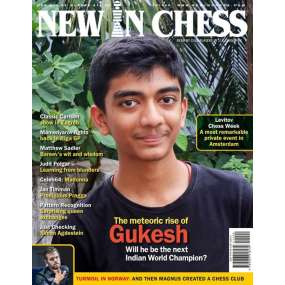
Chess Informant 165 “Echoes” presents:
- FIDE WOMEN'S WORLD CUP 2025 by WGM Sabina-Francesca Foi.or
- TASHKENT TOURNAMENT REPORT by GM Miloš Peruno
.....
 -20,00 zł
United Colours of Autumn
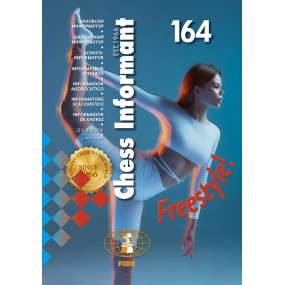
Presents 350 pages of the very best in chess:
Duda - How I won the World Cup
Ivic & Mio. Perunovic - World Cup Fairy Tale
Leitao - South Americans in the World Cup
Perunovic - Duda’s World Cup Black Repertory
Foisor - St. Louis Rapid&Blitz (Tournament review)
Moradiabadi - Sinquefield Cup (Tournament review)
Gormally - Danny’s Chess Diary (Northumbria Masters)
Priyadharshan K. - Asian Masters - Meltwater Tour (Tournament review)
Davies - Understanding the Openings (The Semi-Tarrasch part 1)
Szabo - Anti-Marshall 8.a4 d5!? (Opening Survey)
Prusikin - A Story about Horses and Elephants (Knight versus Bishop)
Petrov - World Championship Game Changers - part 1
Rogers - Reggie Emilia 1984/1985 (Rogers’ Reminiscences)
Griffin - A Tribute to Iron Tigran (Polugaevsky-Petrosian 1970.)
Traditional sections: games, combinations, endings, Tournament reviews, the best game from the preceding volume and the most important theoretical novelty from the preceding volume.
The periodical that pros use with pleasure is at the same time a must have publication for all serious chess students!
Chess Informant 164 “Freestyle!” presents:
 -10%
-10%
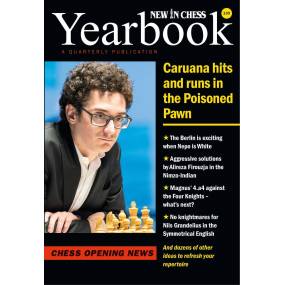
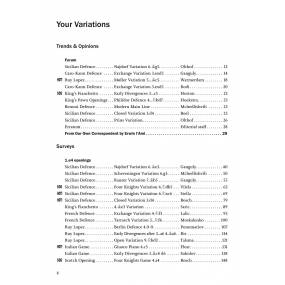
New In Chess Yearbook, which appears four times a year, contains the latest news in chess openings. Each issue brings you dozens of new ideas on the cutting edge of modern chess opening theory. Have a look at what this issue has to offer.
Forum
This issue’s Forum Section features an article by René Olthof on the stunning piece sacrifice with which Fabiano Caruana took Maxime Vachier-Lagrave by surprise in the second leg of the Candidates Tournament. This is followed by some unique analysis material by Ganguly on a game he lost against Pavel Eljanov! Two other grandmasters, Mikheil Mchedlishvili and Max Warmerdam, also made a contribution, and you should certainly check out IJntze Hoekstra’s short but intriguing note to the book Side-Stepping Mainline Theory by Gerard Welling and Steve Giddins!
From Our Own Correspondent
Our GM correspondent Erwin l’Ami starts his column with a good equalizing method for Black in the Tarrasch and then presents a thorough analysis of a correspondence game with the Delayed Poisoned Pawn in the Najdorf. L’Ami has played the Black side of Kramnik’s QGD endgame and demonstrates that Black is OK here – which cannot be said of his two final subjects, the Poisoned Pawn line in the London System and the Winawer French with 7…0-0.
Reviews
Part of Glenn Flear’s Reviews column is dedicated to modern media again. The 2-volume ebook The Modern French by Kryakvin is reviewed and compared to two other recent works on the French: Anish Giri’s awesome Lifetime repertoire course; The French Defense (for Chessable) and Pentala Harikrishna’s book Beat the French Defence with 3.Nc3. The Englishman also pays attention to Ilya Smirin’s book Sicilian Warfare – arguably more than just an opening book – and of course the latest masterpiece by Parimarjan Negi: Grandmaster repertoire: 1.e4 vs Minor Defences.