



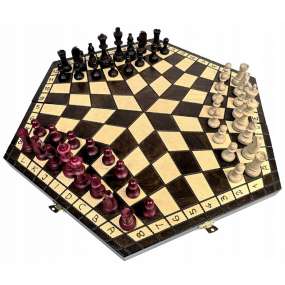
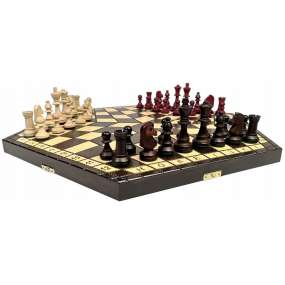
Szachy dla trzech graczy / Szachy dla 3 graczy Duże ( S-62 )
Szachy drewniane
Wymiary: 270 x 470 x 50 mm
Król: 85 mm
Waga: 1,1 kg
217,00 zł

PShowBlog Kategorie
PShowBlog Popularne wpisy
PShowBlog Ostatnie wpisy
Szachy drewniane
Wymiary: 270 x 470 x 50 mm
Król: 85 mm
Waga: 1,1 kg
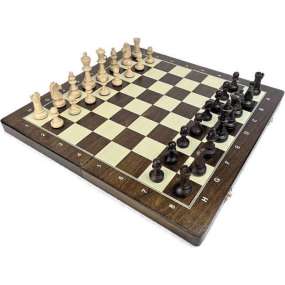
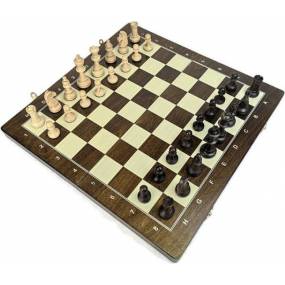
Szachy drewniane turniejowe w rozmiarze idealnie dopasowanym do dzieci w wieku 6-10 lat !!
Figury szachowe - drewniane, wykonane w klasycznym kształcie.
Zastosowany rozmiar figur to idealne rozwiązanie dla dzieci, które zaczynają swoją przygodę z królewską grą.
Szachownica - klasyczna składana na pół szachownica w formie zamykanej kasetki, wewnątrz której znajdziemy miejsce na figury.
Dzięki temu, że szachownica jest składana i można w niej przechowywać figury, zestaw jest prosty w użyciu i transporcie.
Szachy idealnie sprawdzą się jako narzędzie treningowe, które można mieć właściwie zawsze przy sobie.
Drewno: Grab, Buk, Akacja
Waga zestawu: ok.1 kg
WYPRODUKOWANE W POLSCE!
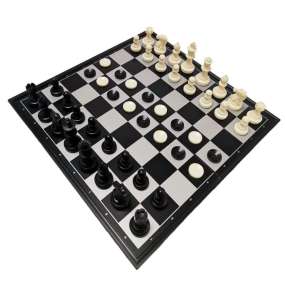
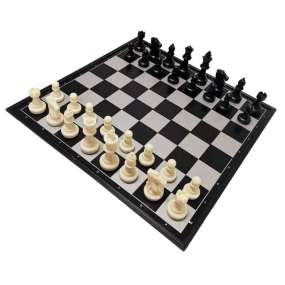
Uwaga: bierki warcabowe nie są magnetyczne.
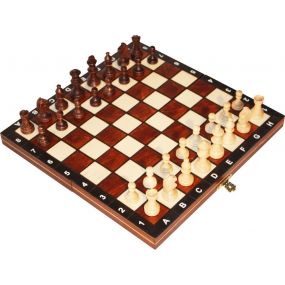
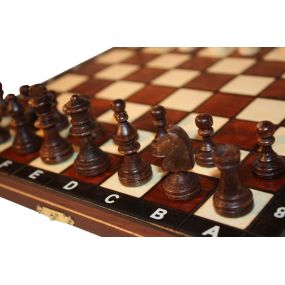
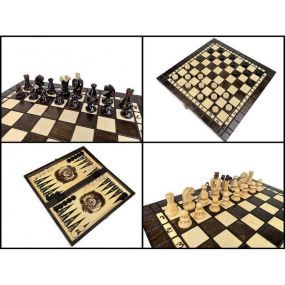
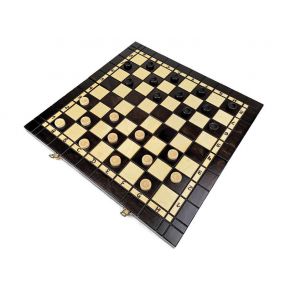
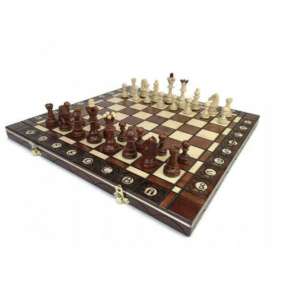
Szachownica i figury wykonane są z drewna.
Wymiary: 420 x 210 x 50 mm
Król: 78 mm
Waga 1.60 kg
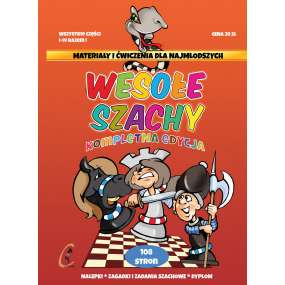
Kompletna edycja książek z serii WESOŁE SZACHY wydana w jednym podręczniku.
Ten kompleksowy podręcznik dla najmłodszych szachistów zawiera nie tylko wszystkie 3 części "Wesołych Szachów, ale także część 4 - czyli całkowitą nowość, dotychczas nigdy nie wydaną!
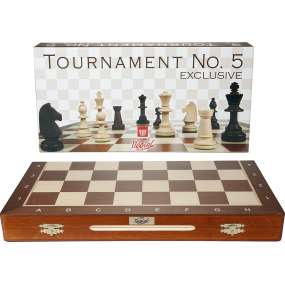
PROFESJONALNE SZACHY TURNIEJOWE ( rozmiar szachownicy oraz figur zgodny w wytycznymi Polskiego Związku Szachowego oraz FIDE)
Szachy drewniane, składane ze specjalna kasetką na figury.
Figury turniejowe Staunton nr 5, obciążone, podklejane filcem.
Szachownica intarsjowana naturalny mahoń
Wymiar szachownicy: 47 x 47 x 2,5 cm;
Wymiar pola szachowego: 48 x 48 mm;
Wysokość króla: 93 mm; pionek: 4,5 cm;
Waga łączna: 2,00 kg;
Zestaw zawiera dwa dodatkowe hetmany.
Zestaw idealnie uzupełnia program nauczania "Edukacja przez Szachy w Szkole" (Książki Magdaleny Zielińskiej "Grajmy w szachy").
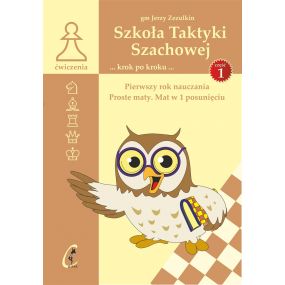
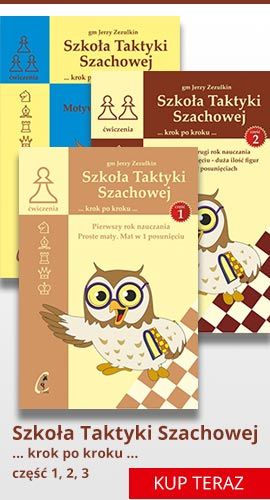
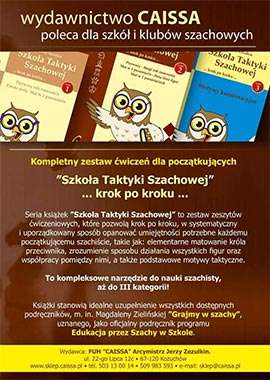
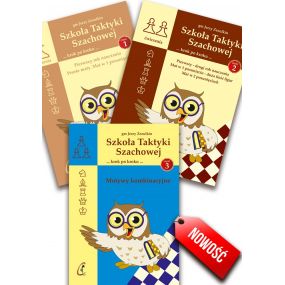
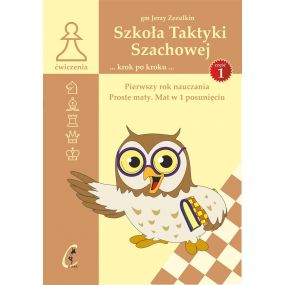
Seria książek ”Szkoła Taktyki Szachowej” to zestaw zeszytów ćwiczeniowych, które pozwolą krok po kroku, w systematyczny i uporządkowany sposób opanować umiejętności potrzebne każdemu początkującemu szachiście, takie jak: elementarne matowanie króla przeciwnika, zrozumienie sposobu działania wszystkich figur oraz współpracy pomiędzy nimi, a także podstawowe motywy taktyczne.
To kompleksowe narzędzie do nauki szachisty, aż do III kategorii!
Książki stanowią idealne uzupełnienie wszystkich dostępnych podręczników, m. in. Magdaleny Zielińskiej ”Grajmy w szachy”, uznanego, jako oficjalny podręcznik programu Edukacja przez Szachy w Szkole.
”Szkoła Taktyki Szachowej” ... krok po kroku ... to jedna z nielicznych pozycji na rynku, która została stworzona tak, aby nauka stała się jak najskuteczniejsza i nie przerodziła się w nużący obowiązek.
Zadania ułożone są w odpowiedni sposób, zachęcający do doskonalenia swoich umiejętności, liczba zadań w każdej z części została dobrana tak, aby młody szachista mógł wystarczająco przećwiczyć zdobyte umiejętności, a przy tym nie znudził się monotonnością tematyki.
Trzecia część została wzbogacona w opisy motywów kombinacyjnych, co sprawia, że stała się kompleksowym narzędziem do ich nauki - zarówno podręcznikiem jak i ćwiczeniami.
Pod każdym z zadań znajdują się miejsca na zapisanie znalezionych rozwiązań.
W celu uniemożliwienia podglądania przez młodych, ciekawskich szachistów, prawidłowe rozwiązania zostały ujęte w łatwej do wyjęcia wkładce w środku książki.
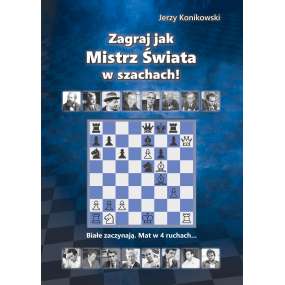
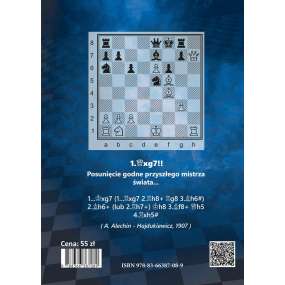
Niezwykle istotne jest zapoznanie się z dorobkiem twórczym mistrzów świata. Czego można się nauczyć od nich? Z całą pewnością bardzo wiele. Każdy z nich był bowiem najwybitniejszym graczem swoich czasów i na drodze do tytułu najsilniejszego zawodnika globu musiał pokonać elitę najlepszych z najlepszych oponentów w rozgrywkach eliminacyjnych i w końcu zwyciężyć w meczu finałowym! W tych trudnych i emocjonujących spotkaniach musiał wykorzystać wszystkie swoje umiejętności oraz wiedzę, aby rozłożyć na łopatki wielu znakomitych przeciwników!
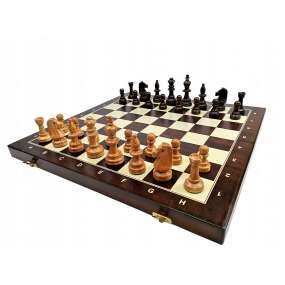
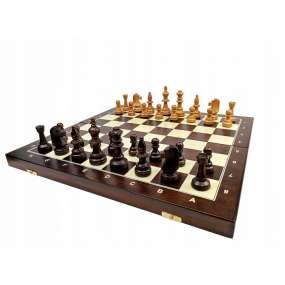
SZACHY TURNIEJOWE NR 5 - CZEREŚNIOWE
Drewniane figury Staunton nr 5 z drewna czereśniowego - obciążone, podklejone zielonym filcem
- Wysokość króla - ok. 90 mm;
- Wysokość pionka - ok. 45 mm
Szachownica drewniana, składana na pół z miejscem na figury w środku.
- Wymiar szachownicy: 48 x 48 x 2,7 cm;
- Wymiar pola szachowego: 48 x 48 mm;
Waga łączna: 1.7 kg;
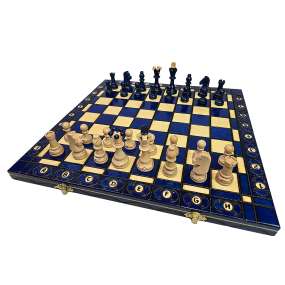
Szachownica i figury wykonane są z drewna.
Wymiary: 420 x 210 x 50 mm
Król: 78 mm
Waga 1.60 kg
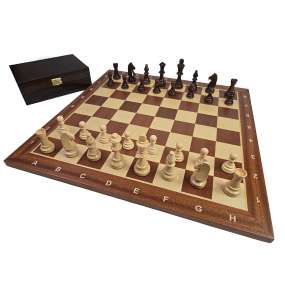
Figury szachowe STAUNTON 6 w kasetce drewnianej + deska drewniana nr6
Figury szachowe turniejowe, drewniane, obciążane, podklejane filcem, wkładane do kasetki drewnianej
Wysokość króla 98mmm.
Deska drewniana, intarsjowana
Wymiary: 55x55x2cm
Wymiary pola: 56 x 56 mm
Waga łączna 4,00 kg
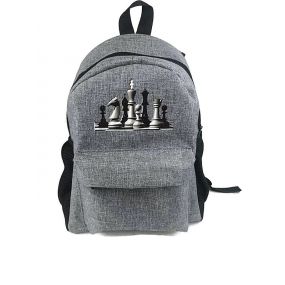
Piękny, nowoczesny plecak w uniwersalnym - szarym kolorze z motywem figur szachowych.
Idealny na zajęcia szkolne, krótkie wyjazdy lub treningi, ale także jako codzienny element garderoby.
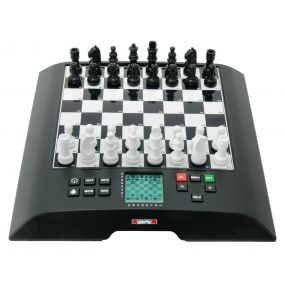
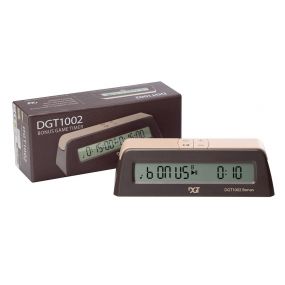
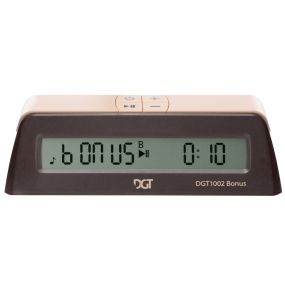
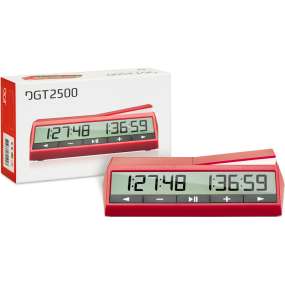
DGT 1002 to najprostszy z dostępnych na rynku zegarów szachowych z opcją "BONUS" (dodawanie czasu za wykonane posunięcie). Jest niezwykle łatwy w obsłudze i bardzo przyjemny w użyciu. Wystarczy nacisnąć + lub -, aby ustawić pożądany czas.
Ze względu na niewielki rozmiar zegara, można go postawić przy samej szachownicy nawet nawet na małej przestrzeni na stole.
Wymiary zegara:
• długość 155 mm,
• szerokość 42 mm,
• wysokość 60 mm.
DGT 1002 pracuje na tylko jednej baterii (dołączonej do zestawu).
Na zegar udzielana jest 2-letnia gwarancja.
Doskonały zegar w prostej formie, prosty w obsłudze z dużym, czytelnym wyświetlaczem - idealny dla każdego gracza.
Polecany dla szkół i klubów szachowych.


 Nowy elektroniczny zegar szachowy LEAP KK9908
Charakterystyka zegara:
• zegar z atestem FIDE!
• opcja dodawania czasu
• 37 ustawień zegara dla szachów oraz różnych gier
• maksymalna prostota obsługi
• duży, czytelny wyświetlacz pozwala na odczytanie czasu nawet z odległości 10m!
waga: 0,2 kg
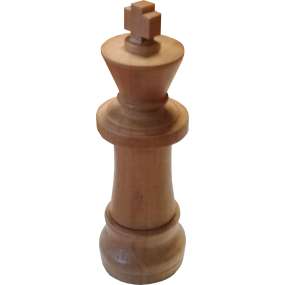
Atrakcyjnie wyglądająca pamięć USB w kształcie króla
Wykonanie: drewno egzotyczne
Pojemność: 64 GB
Wymiary:
- wysokość: 90 mm
- średnica: 30 mm
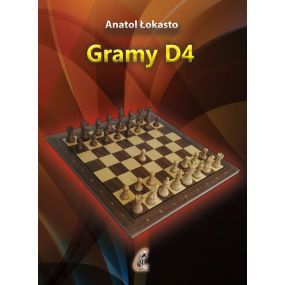
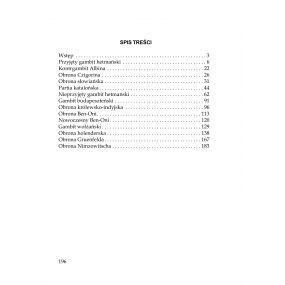
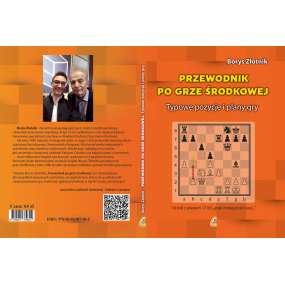
Autor przygotował materiał, który zawiera propozycje gry wariantów przeciwko debiutom zamkniętym i pół zamkniętym Każdemu debiutowi autor poświęcił tyle miejsca, na ile zasługuje ze względu na bogactwo wariantów i częstość jego występowania w praktyce turniejowej. Autor celowo ominął większość systemów z nieprzyjętego gambitu hetmańskiego, które w zasadzie powinny być obowiązkowe w repertuarze debiutowym zawodnika rozpoczynającego partię posunięciem 1.d2-d4.
----------------------------------------------------------------------------
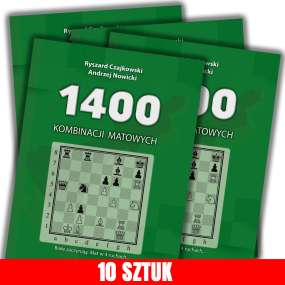
Niniejsza książka to unikalny zbiór 1400 diagramów z praktyki szachowej mistrzów i arcymistrzów z wielu krajów i różnych epok oraz własnych przykładów samych autorów.
Stopień trudności poszczególnych zadań jest na tyle zróżnicowany, by każdy szachista czerpał radość z ich rozwiązywania, niezależnie od swoich umiejętności. Tak więc w książce znajdziemy proste i bardziej skomplikowane przykłady taktyki szachowej, klasyczne końcówki, piękne kombinacje, które na zawsze przeszły do historii szachów, studia, etiudy i kompozycje szachowe oraz odzwierciedlenie zawartych w nich idei przeniesionych do praktyki turniejowej.
Czytelnik może poznać różnorodne sposoby matowania – od najprostszych jedno i dwuposunięciowych do mata w 262 (!!) posunięciach.
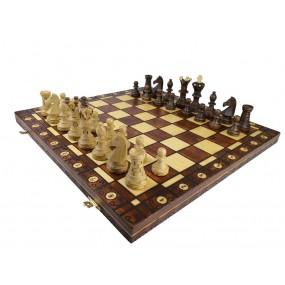
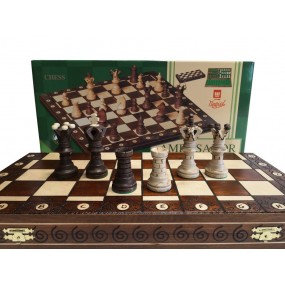
Najlepiej sprzedające się szachy od lat.
Najlepszy stosunek jakości do ceny.
Szachownica i figury wykonane z drewna.
SZACHOWNICA wypalana, składana na pół,
w środku znajduje się wkładka na figury szachowe
FIGURY drewniane, wypalane, podklejane zielonym filcem
Wymiary szachownicy: 54 x 54 x 3 cm
Wymiar pola: 55 x 55 mm
Król: 110 mm
Waga 2.50 kg
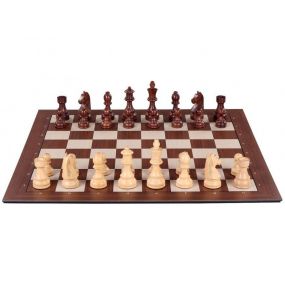
ZESTAW SMART 1 - zestaw do transmisji elektronicznej.
Zestaw stworzony z myślą o użytku profesjonalnym w ciągu szachownic (na turniejach, w klubach etc.)
Zawiera:
- szachownicę elektroniczną DGT SMARTBOARD
- figury drewniane DGT TIMELESS
- zestaw połączeniowy (tzw. zestaw kabli bocznych)
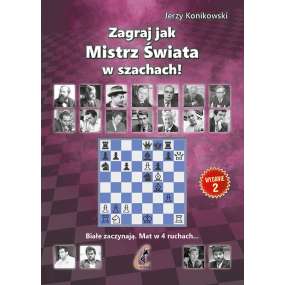
Niezwykle istotne jest zapoznanie się z dorobkiem twórczym mistrzów świata. Czego można się nauczyć od nich? Z całą pewnością bardzo wiele. Każdy z nich był bowiem najwybitniejszym graczem swoich czasów i na drodze do tytułu najsilniejszego zawodnika globu musiał pokonać elitę najlepszych z najlepszych oponentów w rozgrywkach eliminacyjnych i w końcu zwyciężyć w meczu finałowym! W tych trudnych i emocjonujących spotkaniach musiał wykorzystać wszystkie swoje umiejętności oraz wiedzę, aby rozłożyć na łopatki wielu znakomitych przeciwników!
 -24,00 zł
 -39,00 zł
 -20%
-20%
- Compensation is a chess concept that we only fully understand when we enter the world of serious chess.
- The relative value of pieces is perhaps the most difficult chess concept of all to explain.
- It is one that every player must feel and believe in and can only be accepted with the help of our own practice, and when we feel it come together as though a part of us.
- Why so much talk about such or similar sacrifices? Quite simply because we are afraid! We have been taught, and practice shows and proves the clear fact, that the closer we get to the last part of the game, the ending, the more pronounced a material advantage becomes.
- If in the middlegame we can still hope for sudden turns, for the influence of other pieces, this is negligible in the endgame.
- Maybe less so with tactical sacrifices, where we immediately see what the sacrificer gets in return.
- How can we not accept the rook that the opponent offers us, when there is nothing concrete to see? One or two weaknesses perhaps, but they can be eliminated, and the material advantage and a secure victory in the endgame remains.
 -10%
-10%
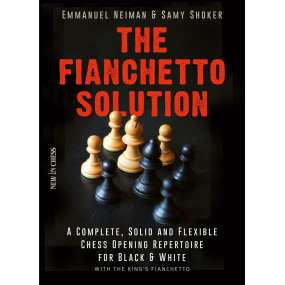
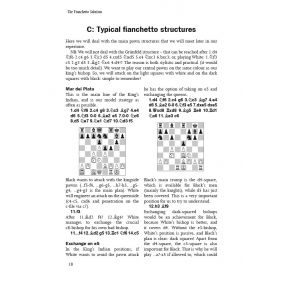
When experienced chess teacher Emmanuel Neiman learned that some of his pupils hesitated to play in competitions for fear of being crushed in the opening, he wanted to help.
Neiman knew that amateurs have little time to seriously study opening theory, so he had to come up with a practical, complete, easy-to-learn and solid opening repertoire that would not outdate rapidly.
And that is what he did. Neiman advises amateurs to play (with both colours!) the flexible King’s Fianchetto system, where the Bishop is a defender of the King and at the same time an attacker.
 -10%
-10%
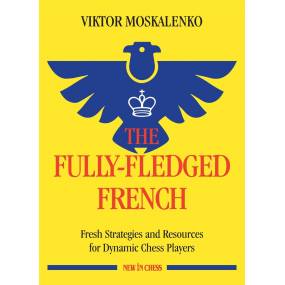
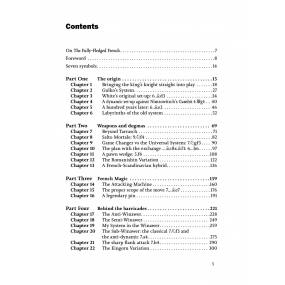
Viktor Moskalenko’s bestselling books The Flexible French (2008) and The Even More Flexible French (2015) were hailed by reviewers from all over the world as eye-opening, full of new ideas, easy to read, sparkling, and inspirational.
Time has not stood still, and the popular French Defence has seen a lot of new developments, not in the last place thanks to Moskalenko’s books. The Ukrainian grandmaster himself has kept playing and researching his beloved chess opening and decided to write a new book with countless improvements, alternatives, new ideas and fresh weapons that will delight and surprise the reader.
As always, Moskalenko’s analysis is high-level, yet his touch is light and fresh. In his own inimitable style, he whets the reader’s appetite and shares his love for the French with gusto. The wealth of original and dynamic options in every main line proves that the French continues to be a highly intriguing defence that is very much alive.
The Fully-Fledged French is a typical Moskalenko book: practical, accessible, original, entertaining and inspiring.
Viktor Moskalenko (1960) is an International Grandmaster and a FIDE Senior Trainer. Other books by the former Ukrainian champion include Training with Moska, The Fabulous Budapest Gambit, and An Attacking Repertoire for White.
 -10%
-10%
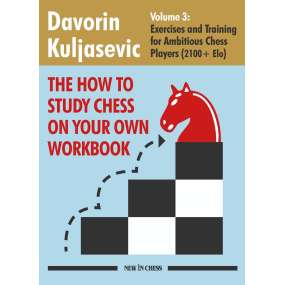
The astounding success of How To Study Chess on Your Own made clear that thousands of chess players want to improve their game — and like to work on their training at least partially by themselves.
 -15%
-15%
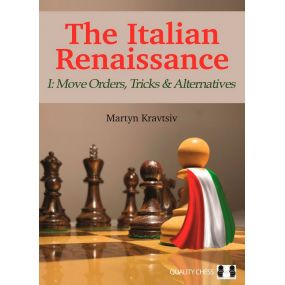
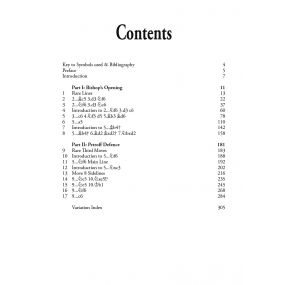
With the seemingly bulletproof Berlin Wall and Marshall Attack continuing to thwart White’s best efforts to find an advantage in the Ruy Lopez, many top players have incorporated the Italian Game (1.e4 e5 2.Nf3 Nc6 3.Bc4) along with the related Bishop’s Opening (2.Bc4) into their repertoires. In this two-volume work, GM Martyn Kravtsiv shares his insights on this Italian Renaissance from White’s perspective.
Before reaching the Italian, White must be ready to deal with the Petroff Defence (1.e4 e5 2.Nf3 Nf6). In the first part of this, the first volume, Kravtsiv advocates the well-regarded 3.Nxe5 d6 4.Nf3 Nxe4 5.Nc3 variation, offering an array of weapons to cause problems for Black, including a large number of untested yet dangerous ideas.
The next topic is the Bishop’s Opening, which can be used as an optional Anti-Petroff move order as well as a weapon in its own right. 2.Bc4 may or may not transpose to the main Italian lines, and it is useful to be able to play both move orders in order to choose the most effective sequence against each opponent. By combining this book with its companion volume, you too can be a part of The Italian Renaissance .
Martyn Kravtsiv is a Ukrainian Grandmaster with a peak rating of 2685, with expert knowledge and experience of 1.e4.
 -15%
-15%
In this, the second book in his two-volume work, GM Martyn Kravtsiv shines the spotlight on the Italian Game (1.e4 e5 2.Nf3 Nc6 3.Bc4). Most chess players learn the basics of this opening as beginners, yet it contains enough depth and complexity to provide the world’s best players with a rich and ever-evolving battleground.
Though written unmistakably from White’s perspective, this work takes a different approach from that of a typical repertoire book. Rather than filling valuable pages analysing rare, inferior and generally irrelevant options, the author delves deep into the most important main lines, explaining the key move-order details and providing White with a series of well-researched ideas which will force your opponents to solve difficult problems at the board.
Join The Italian Renaissance and create your own masterpieces!
Martyn Kravtsiv is a Ukrainian Grandmaster with a peak rating of 2685, with expert knowledge and experience of 1.e4.
 -50,00 zł
Grandmaster Simon Williams has played the Classical Dutch for over twenty years. It remains his favourite opening and has featured in some of his greatest individual results, including a win over World Championship finalist Boris Gelfand.
 -10%
-10%
Many club players think that studying chess is all about cramming as much information in their brain as they can. Most textbooks support that notion by stressing the importance of always trying to find the objectively best move. As a result amateur players are spending way too much time worrying about subtleties that are really only relevant for grandmasters.
 -7%
-7%
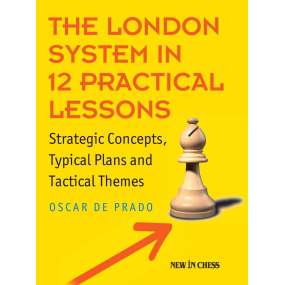
Nikola Sedlak is a renowned chess player known for his expertise in the London System. He is a grandmaster from Serbia who has been considered one of the strongest players in the country for many years. Sedlak is also a well-known chess trainer and author, who wrote several books on the London System and other chess openings.
 -10%
-10%
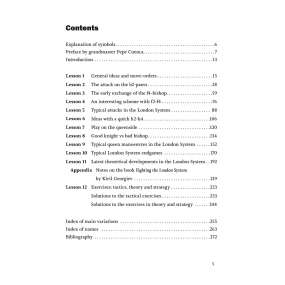
The London System is being played by an ever increasing number of players, and it’s easy to see why. Against virtually every Black defence after 1.d4 it offers White an easy-to-learn and reliable set of lines. In the process, White has interesting choices between strategic or more aggressive approaches, while avoiding loads of opening theory. Ideal for players who don’t have much time to study.
 -50%
-50%
Fireworks!
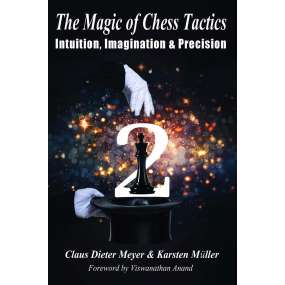
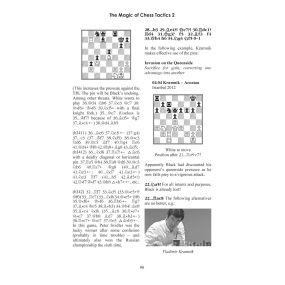
When released in 2002, the first volume of The Magic of Chess Tactics by FIDE Master Claus Dieter Meyer and German Grandmaster Karsten Müller was extremely popular. It was one of the first books to deal with tactics on high level. Like the first book, intended for advanced (Elo 1800+) players, this second volume puts special tactical motifs and themes under the analytical microscope.
 -10%
-10%
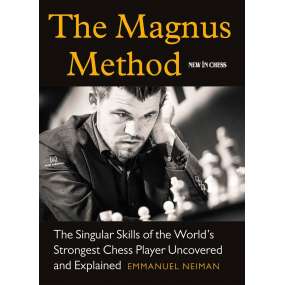
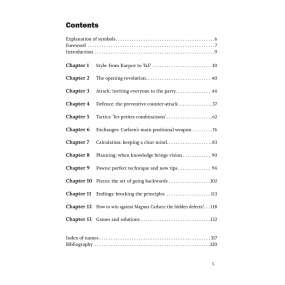
What is it that makes Magnus Carlsen the strongest chess player in the world? Why do Carlsen’s opponents, the best players around, fail to see his moves coming? Moves that, when you replay his games, look natural and self-evident?
Emmanuel Neiman has been studying Carlsen’s games and style of play for many years. His findings will surprise, delight and educate every player, regardless of their level. He explains a key element in the World Champion’s play: instead of the ‘absolute’ best move he often plays the move that is likely to give him the better chances.
 -38,00 zł
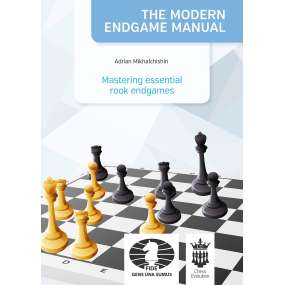
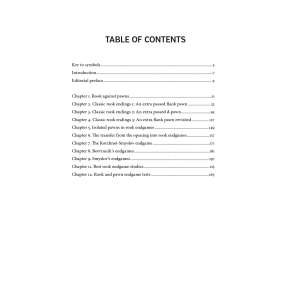
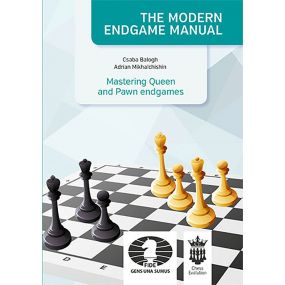
We are very proud to present the first FIDE-approved endgame manual, written by 3 of the world leading experts: FIDE Senior Trainers IGM Mikhalchishin, IGM Grivas and IGM Balogh. A total of 8 endgame books will take you step-by-step from king & pawn endgames all the way through to extremely complex and materially-unbalanced endgames. Become an expert and learn to enjoy even more the “silent beauty” of the endgame.
 -40%
-40%
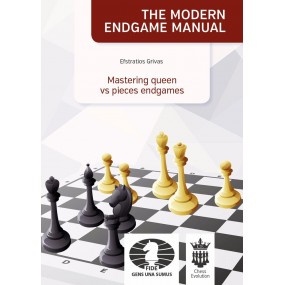
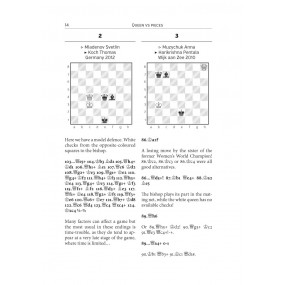
We are very proud to present the first FIDE-approved endgame manual, written by 3 of the world leading experts: FIDE Senior Trainers IGM Mikhalchishin, IGM Grivas and IGM Balogh. A total of 14 endgame books will take you step-by-step from king & pawn endgames all the way through to extremely complex and materially-unbalanced endgames. Become an expert and learn to enjoy even more the “silent beauty” of the endgame.
 -40%
-40%
We are very proud to present the first FIDE-approved endgame manual, written by 3 of the world leading experts: FIDE Senior Trainers IGM Mikhalchishin, IGM Grivas and IGM Balogh. A total of 8 endgame books will take you step-by-step from king & pawn endgames all the way through to extremely complex and materially-unbalanced endgames. Become an expert and learn to enjoy even more the “silent beauty” of the endgame.
 -20%
-20%
The French Defence is coming back to fashion again!
 -15,00 zł
When Thinkers Publishing suggested I could try to produce a book on the Alekhine Defense, since for some reason I seem to have the reputation of using maverick openings, this idea looked reasonable. In that Covid period I had nothing better to do after all! After a few months I however realized that Thinkers Publishing had passed me a hot potato (many thanks!), i.e. the arduous task of checking the serious recent works of Kornev and Negi, plus the mammoth book of Chetverik and Kalinichenko, not to mention some "already ancient" suggestions fram John Shaw dated 2016!
You will therefore find some references to those inspiring sources throughout this book (Chetverik & Kalinichenko being abbreviated to C&K). I wasn't sure at first whether I wanted to talk about "all existing" lines of this intriguing opening, and discovered in the process there were quite a few, or whether I would sort them out to offer a Black repertoire. I finally decided on the first approach, to give you, dear reader, a broader choice. Among all the lines included in that book, the Four Pawns Attack Classical, covered in the Bonus Lines chapter, is probably the only one where a Black player would need more knowledge in order to be "safe" from a theoretical standpoint.
Hope you'll enjoy reading this book!
 -14,00 zł
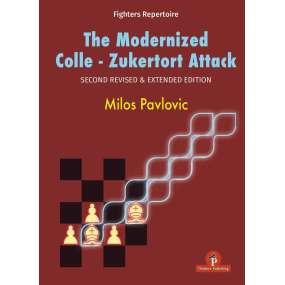 -24,00 zł
I have returned to my book from a few years ago, to an opening that at the time was a rare guest among books as a topic – and not only among books, but also in tournament practice. In the intervening years it has become very popular to use this old and somewhat forgotten method of playing and I have found lots of interesting new games.
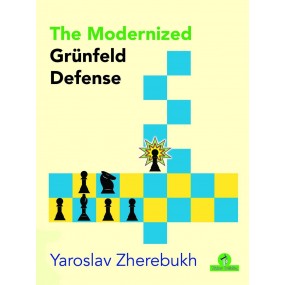
 -25%
-25%
Yaroslav Zherebukh was born in July 1993 in Lviv, Ukraine. He earned the Grandmaster title in January of 2009 at 15.5 years of age. In 2011 Yaro participated in the World Cup where he was seeded 97 th out of 128 contestants. He won his first three matches against Pavel Eljanov, Ruben Felgaer and Shakhriyar Mamedyarov before losing to David Navara. In 2013 he moved to the United States shifting his focus to coaching and academics. In 2017 he competed in the US championship where he scored a spectacular win over world #2 Fabiano Caruana and qualified to the 2017 World Cup! He has coached a plethora of talented American youths induding world dass GM Jeffery Xiong. Besides his chess activities, Yaro holds an MS in financial economics from Saint Louis University and has experience working for private equity firms in New York City.
The Modernized Grünfeld Defense will be extremely helpful for any chess player looking for a reliable lifetime repertoire against White's 1.d4. It will benefit current Grünfeld players as Yaro unveils his analysis and numerous novelties waiting to be played over the board.

 -10%
-10%
“Pawns are the soul of chess.” We have all heard this phrase more than once in our chess life and we owe it to the great French player François-André Danican, so-called Philidor, considered one of the best chess players of the 18th century.
It’s not surprising that with this way of thinking, he revolutionized chess, which until then was almost all about direct attacks on the king. With this, he also changed the way of understanding and playing openings, in which he introduced a new concept for the time – that the pawns should be ahead of the pieces.
Bearing this in mind, the defense he created can be much better understood, in which all these rules are fulfilled and the importance of the pawn structure is maximal.
 -20%
-20%
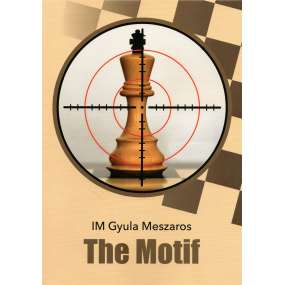
"The motif is the effect that a chess piece has towards another (own or opposing) piece, or square" so is the definition by the author in the introduction chapter.
According to Meszaros, motifs fall into two categories: basic or combinational. The elements of both groups can be simple or complex, depending on the number of their components.
Concepts like Potential Attack, Undefended piece or square, X-Ray, Blockade are explained with illustrative examples.
 -40%
-40%
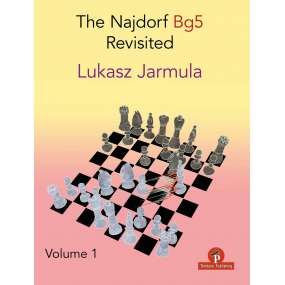
Born in 1998 Lukasz Jarmula is a 23 year old Polish International Grandmaster. Since 2015 he has represented SV Griesheim in the German Bundesliga. He holds 17 medals from the Polish Youth Championships in all categories: Individual, Team, Rapid and Blitz. In 2016 he shared 2-5th place at the European Youth U18 and in 2014 won the silver medal at the European Youth Team Championship.
The Bg5 variation of the Najdorf is the most critical and perhaps the most devastating weapon in the hands of the well- prepared player. In his first book for Thinkers Publishing, Lukasz brings us many sharp and aggressive ways to play for a win. The book consists so many interesting variations, we decided to split it into two volumes. We can only compliment hirn for writing a most complete book on a highly popular opening, the Najdorf Sicilian.
 -20,00 zł
 -20%
-20%
 -20%
-20%
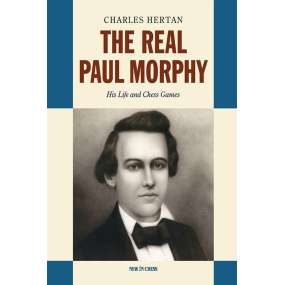
Paul Morphy might well be the most brilliant and enigmatic chess champion of all time. He burst onto the scene in 1857 as a 20-year-old and dominated the chess world for two short years, convincingly defeating all the strongest players. After conquering the European chess scene, Morphy was universally recognised as the greatest player of all time. But at the age of 22 he suddenly and permanently retired from serious competition.

 -20%
-20%
Robert James Fischer is one of the greatest and most celebrated players in chess history. Exactly fifty years since the American won the right to challenge Boris Spassky for the World Championship crown, Tibor Karolyi documents Fischer’s unique journey from precocious youngster to the chess icon who obliterated Taimanov and Larsen before convincingly beating Petrosian on The Road to Reykjavik.
 -50%
-50%
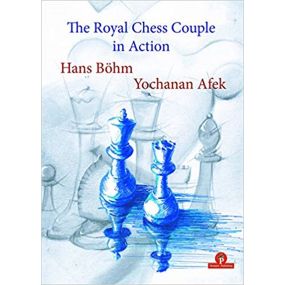
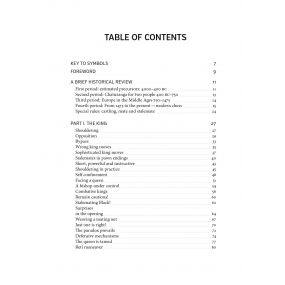
The Royal Chess Couple is a combined attempt to introduce the various traits of the most significant piece with the most powerful piece on the chessboard. Following a short historic review of the development and metamorphoses of each piece over time, the reader is offered 240 positions (480 in total) from tournament practice as well as from the magic world of chess composition. In each position a royal piece plays either a crucial offensive or defensive role. These positions are subdivided into 60 themes, four positions per theme, arranged by their increasing difficulty. The reader may use the positions as training challenges to improve his understanding and playing skills or just to enjoy playing through them. In either case he will learn to appreciate the characteristic qualities of each piece alone and in collaboration with other pieces.
 -14,00 zł
This book presents a Black repertoire based on the Scandinavian Defence with 1.e4 d5 2.exd5 Qxd5 3.Nc3 Qd6. This is the safest yet aggressive queen retreat. It allows Black to increase pressure on d4 with ...0-0-0 or ...Rd8 while keeping coordination in the centre. Kotronias clearly explains the main strategic principles that are involved in finding the best moves for Black: the assymetric pawn structure gives the significant resource of turning d5 into a fortress -- the importance of developing the c8 Bishop outside the pawn structure -- the best ways to create more space -- finding the best and most effective place for your Queen. The Greek GM offers new plans for Black in the most topical lines, including vital new approaches against the Shirov plan (7.f4) and in a line with in which Kotronias himself got an edge with White in a game against the great expert of this system, Sergey Tiviakov. Kotronias' plans are backed up with deep and fresh analysis based on solid chess understandin
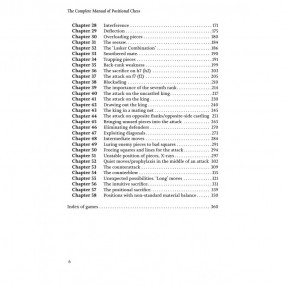
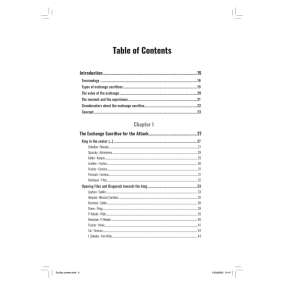
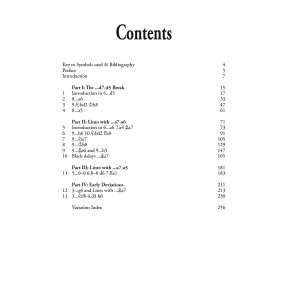
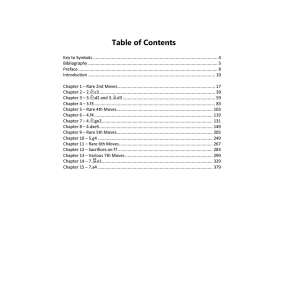
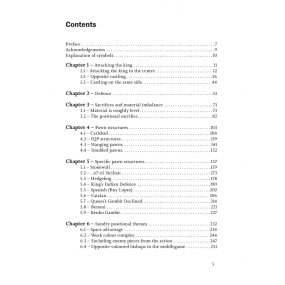
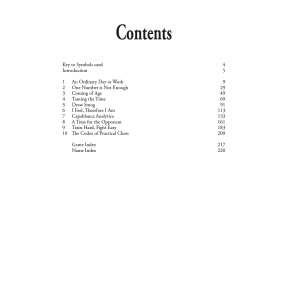
Spis treści:
Contents 3
Bibliography 4
Introduction 5
Chapter 1. 1.e4 d5 Rare Second Moves Main Ideas 9 Step by Step 12 Annotated Games 20
Chapter 2. White’s Third Move Alternatives Main Ideas 27 Step by Step 29 Annotated Games 45
Chapter 3. 3.Nc3 Qd6 without 4.d4 Main Ideas 69 Step by Step 72 Annotated Games 79
Chapter 4. 4.d4 Nf6 without 5.Nf3 Main Ideas 87 Step by Step 91 Annotated Games 104
Chapter 5. 4.d4 Nf6 5.Nf3 c6 Rare 6th Moves Main Ideas 111 Step by Step 114 Annotated Games 123
Chapter 6. 4.d4 Nf6 5.Nf3 c6 6.h3 Main Ideas 131 Step by Step 134 Annotated Games 140
Chapter 7. 6.Ne5 Nbd7 7.Bf4 and the Shirov plan 7.f4 Main Ideas 149 Step by Step 153 Annotated Games 167
Chapter 8. The Main Line 7.Nc4 Main Ideas 177 Step by Step 182 Annotated Games 197 Variation Index 217 List of Annotated Games 219
 -10%
-10%
The Scandinavian Defence is one of the most popular chess openings among amateur players, and it is easy to see why. Black players immediately limit the opening theory they have to know because there is no way White can side-step Black’s first move. What’s more, the Scandinavian requires only very little theoretical knowledge, so it has an extremely low maintenance factor. To cap it all, Black gets a solid structure.
And that’s not even the end of the good news, as Thomas Willemze demonstrates in this compact and practical manual. Playing the Scandinavian teaches invaluable techniques that you can use in almost all of your other games. Pressuring the centre, neutralizing your opponent’s initiative, improving your piece coordination, trading the right pieces and exploiting your opponent’s weak points are all typical ‘Scandinavian’ spin-offs that Thomas Willemze teaches you in his trademark lucid style.
The Scandinavian for Club Players offers everything you need to know to be fully prepared to meet 1.e4. The various lines are enriched with verbal explanations, diagrams, flash-cards and exercises that make this book even more accessible. Willemze not just uses examples from the games of elite grandmasters. As an experienced trainer he knows that discussing club player’s adventures are particularly instructive for his target group.
Thomas Willemze is an International Master from The Netherlands. He is an experienced trainer of amateur players and has been the National Youth Coach of the Dutch Chess Federation. He is the author of the acclaimed ‘What would you play?’ column in New In Chess magazine, aimed at helping club players to improve their decision-making skills. In 2018 he published the best-selling improvement guide The Chess Toolbox, also available as a NIC Interactive eBook and a Chessable video course.
 -10%
-10%
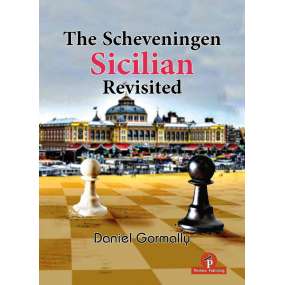
The Sicilian Scheveningen Defense is a highly respected and flexible variation of the Sicilian Defense, characterized by the pawn structure Black adopts with pawns on e6 and d6. It arises after the moves 1. e4 c5 2. Nf3 d6 3. d4 cxd4 4. Nxd4 Nf6 5. Nc3 e6. This setup allows Black to maintain a solid central presence while keeping options open for dynamic counterplay.
 -20%
-20%
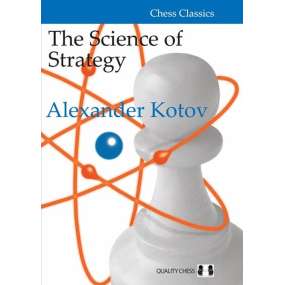
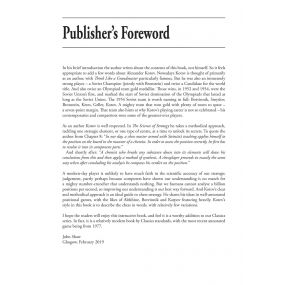
Chess is a strategically deep game and it is no surprise that players often struggle to find the right strategy over the board. Computers may be able to show a good move in a position, but they can’t explain how it should fit into an overall plan.
 -10%
-10%
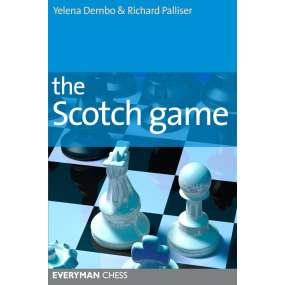
The Scotch Game is an ideal opening weapon for White. It's ambitious, totally sound and leads to a wide variety of strategically complex positions. The Scotch was a particular favourite of Garry Kasparov, who invigorated it with a number of major discoveries to make it an opening to be feared throughout the chess world.
In this book, Yelena Dembo and Richard Palliser team up to take a modern-day look at this popular opening. They provide thorough coverage of the critical main lines, recommend the best options for both sides, and outline the key tactical and positional ideas.
- Comprehensive coverage of the Scotch Game
- Written by renowned opening experts
- Packed with new ideas and critical analysis
 -20%
-20%
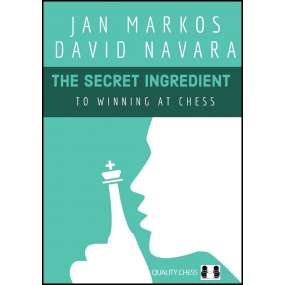
The Secret Ingredient is a grandmaster guide to maximizing your chess results, focusing on key elements of practical play which have received little to no attention in previous chess literature.
How exactly can we best make use of computers? What’s the ideal, step-by-step way to prepare against a specific opponent? How can we optimize our time management at the board? And what’s the one key skill that separates the best players from those who have yet to reach their full potential? GM Jan Markos sheds light on these topics and many more, helped by the world-class insights of his good friend GM David Navara.
 -10%
-10%
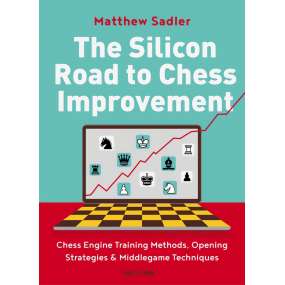
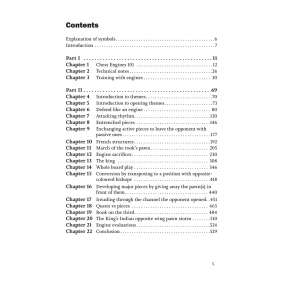
Every chess player, from club level up, can improve their game by using engines. That is the message of Matthew Sadler’s thought-provoking new book, based on many years of experience with the world’s best chess software. You may not be able to replicate their dazzling-deep calculations, but there is so much more your engine can do for you than just checking variations!